India is a country deeply rooted in traditions that span thousands of years, influencing every aspect of daily life—from attire and cuisine to rituals and values. These traditions are not just customs, but expressions of the diverse cultural identity that define the soul of India. Whether it's touching elders’ feet as a gesture of respect, decorating homes with rangoli, or practicing yoga for inner balance, these timeless practices reflect harmony, family bonding, and spiritual depth.
Festivals in India are grand celebrations that bring people together in joy and devotion. Each festival—from the radiant lights of Diwali, the colorful splashes of Holi, to the spiritual serenity of Eid and Christmas—is steeped in history and rich symbolism. These occasions are not only religious but social events, uniting communities through music, dance, food, and traditions passed down through generations. They celebrate the essence of India: unity in diversity.
.svg)
Durga Puja is the most significant and grand festival of Bengal, celebrated with immense devotion, artistry, and cultural vibrance. It marks the victory of Goddess Durga over the demon king Mahishasura, symbolizing the triumph of good over evil. The festival lasts for five days—Shashthi, Saptami, Ashtami, Navami, and Dashami—each holding religious and cultural significance. Elaborate pandals (temporary temples) with artistic themes are set up across cities, showcasing breathtaking idols of Goddess Durga and her divine family. People indulge in cultural performances, traditional dances (Dhunuchi Naach), and feasting, making it a blend of devotion, art, and social celebration..
Dishes prepared include:


Lohri is a vibrant Punjabi festival celebrated on January 13, marking the end of winter and the harvest of rabi crops. It is deeply rooted in agrarian traditions, symbolizing gratitude for nature’s bounty. The festival is associated with the sun’s transition towards longer days, known as Makar Sankranti. The celebration revolves around a grand bonfire, where families and communities gather, sing folk songs, and perform Bhangra and Gidda dances. People toss sesame seeds, jaggery, popcorn, and rewri into the fire, symbolizing prosperity and seeking blessings. Lohri is especially significant for newlyweds and newborns, as they receive special attention and gifts.
Lohri marks the end of winter and the onset of longer days, symbolizing renewal and prosperity. Rooted in Punjab’s agrarian traditions, it honors the harvest and pays tribute to the Sun God for warmth and abundance. The bonfire serves as a focal point for community gathering, fostering unity and shared joy.
For newlyweds and newborns, Lohri signifies new beginnings, celebrated with music, dance, and traditional customs. The festival strengthens social bonds, preserves folklore, and reflects gratitude towards nature, reinforcing cultural heritage across generations.


Traditional Delicacies of Lohri
The Festival of Lights, holds deep cultural and spiritual significance in India. It symbolizes the victory of light over darkness and good over evil, marking Lord Rama’s return to Ayodhya after defeating Ravana. Celebrated across religions, it also honors Goddess Lakshmi, the deity of wealth and prosperity. Families clean and decorate their homes, light diyas, exchange sweets, and burst fireworks to welcome positivity and abundance. The festival fosters unity, joy, and gratitude, reinforcing age-old traditions and strengthening social bonds.
Foods associated with Diwali:


Significance of Diwali Dishes
Diwali dishes hold deep cultural and symbolic significance, representing prosperity, joy, and the spirit of togetherness. Sweets like laddoo, kaju katli, and barfi symbolize good fortune and success, often exchanged as gestures of goodwill. Syrupy treats like jalebi and gulab jamun signify abundance and sweetness in life, while savory snacks like chakli, namak pare, and mathri balance the festive spread with their crisp textures and bold flavors. Each dish carries traditions passed down through generations, fostering warmth, generosity, and a sense of nostalgia, making food an essential part of Diwali celebrations.
Holi, the festival of colors, holds immense cultural significance in India, symbolizing the victory of good over evil, the arrival of spring, and the celebration of unity and joy. Rooted in Hindu mythology, it commemorates the triumph of devotion over tyranny, as seen in the legend of Prahlad and Holika. The festival transcends social barriers, fostering harmony as people, regardless of caste, creed, or status, come together to play with colors, share sweets, and strengthen relationships. Holi also marks the renewal of life, encouraging forgiveness, laughter, and the embrace of vibrant traditions that define India’s rich cultural heritage.
Foods commonly made for the Prophet’s birthday include:


Significance of these dishes
Gujiya, a sweet dumpling filled with khoya and dry fruits, symbolizes prosperity and the joy of festivity, making it a quintessential Holi treat. Bhang Thandai, infused with cannabis, is deeply rooted in tradition, associated with Lord Shiva, and enhances the revelry by uplifting spirits. Malpua, a syrup-soaked pancake, signifies indulgence and togetherness, bringing people closer through its rich, comforting flavors. Kachori and Samosa, with their spicy, crispy textures, offer a savory balance to the festival’s sweet treats, representing the vibrant diversity of flavors in Indian culture. Together, these delicacies capture the essence of Holi—celebration, unity, and the shared joy of feasting.
India's rich history and diverse cultures are reflected in its breathtaking heritage sites and landmarks. From ancient temples and majestic forts to grand palaces and sacred rivers, these sites tell the story of India’s past, showcasing architectural brilliance, spiritual traditions, and historical legacies that continue to inspire generations.
The Red Fort, a UNESCO World Heritage Site, stands as a powerful symbol of India’s rich cultural heritage and its struggle for independence. Built by Emperor Shah Jahan in 1648, this architectural marvel showcases Mughal grandeur with its imposing red sandstone walls, intricate carvings, and sprawling courtyards. Beyond its historical splendor, the fort holds deep national significance—it was from its ramparts that India’s first Prime Minister, Jawaharlal Nehru, hoisted the national flag on August 15, 1947. Today, it remains a beacon of India’s sovereignty, unity, and enduring legacy.


The Red Fort, originally white and later painted red by the British, features an octagonal design, secret tunnels, and a blend of Persian, Timurid, and Indian architecture, once adorned with jewels but later altered by British barracks, and today stands as a symbol of India's independence, hosting the annual flag hoisting on August 15 alongside a captivating sound and light show narrating its history.


The Taj Mahal, a masterpiece of Mughal architecture, stands as a timeless symbol of India’s rich cultural heritage and diversity. Built by Emperor Shah Jahan in memory of his wife Mumtaz Mahal, this UNESCO World Heritage site blends Persian, Islamic, and Indian artistic influences, showcasing India’s deep-rooted history of craftsmanship and cultural fusion. Beyond its breathtaking beauty, the Taj Mahal represents love, devotion, and artistic brilliance, drawing millions from around the world, making it a beacon of India’s diverse and enduring cultural legacy.

History Of Taj Mahal
The Taj Mahal, an iconic symbol of love and Mughal grandeur, was commissioned by Emperor Shah Jahan in 1632 in memory of his beloved wife, Mumtaz Mahal. Constructed over two decades, this architectural marvel blends Persian, Islamic, and Indian styles, featuring white marble, intricate carvings, and symmetrical gardens. Designed by architect Ustad Ahmad Lahauri, it stands as a Masterpiece of Mughal craftsmanship. A UNESCO World Heritage site, the Taj Mahal remains one of the most celebrated monuments globally, reflecting India's rich cultural heritage and the artistic zenith of the Mughal era.


Qutub Minar, a UNESCO World Heritage Site in Delhi, is the tallest brick minaret in the world, standing at 72.5 meters. Built in 1193 by Qutb-ud-din Aibak and later expanded by his successors, it showcases Indo-Islamic architecture with intricate carvings and verses from the Quran. A symbol of Delhi’s rich history, it marks the beginning of Muslim rule in India and remains a stunning testament to medieval craftsmanship.


Intresting facts about Qutub Minar:
Qutub Minar has five stories, each with its own historical significance and unique architectural elements:
The Konark Sun Temple, a 13th-century architectural marvel in Odisha built by King Narasimhadeva, is a UNESCO World Heritage Site renowned for its intricate stone carvings, chariot-shaped structure with 24 elaborately sculpted wheels, and depictions of celestial beings, animals, and daily life, symbolizing the grandeur of India’s ancient engineering and artistic excellence, while also serving as a spiritual homage to Surya, the Sun God, reflecting the astronomical and cultural significance of the era, making it one of India's most magnificent and enduring heritage landmarks.


The Konark Sun Temple, built in the 13th century by King Narasimhadeva I of the Eastern Ganga Dynasty, is an architectural masterpiece dedicated to Surya, the Sun God. Designed as a colossal chariot with intricately carved wheels, horses, and sculptures, it reflects the peak of Odishan temple architecture and India’s artistic brilliance. Though partially in ruins today, its influence on Indian culture, dance, and mythology remains profound, inspiring classical Odissi dance, folklore, and festivals like the Konark Dance Festival, making it a revered symbol of India’s spiritual heritage and architectural grandeur.
The Varanasi Ghats, stretching along the sacred Ganga River, are the spiritual heart of India, where life, death, and devotion merge seamlessly. From the ritualistic Ganga Aarti at Dashashwamedh Ghat to the solemn cremation ceremonies at Manikarnika Ghat, each step holds centuries of tradition, mythology, and faith. A symbol of India’s timeless heritage, these ghats embody the essence of Hindu spirituality, cultural vibrancy, and the eternal cycle of life and rebirth.


Ghats in Varanasi are riverfront steps leading to the banks of the Ganges river. The city has 84 ghats. Most of the ghats are bathing and puja ceremonial ghats, while two ghats, Manikarnika and Harishchandra, are used exclusively as cremation sites. Most of the ghats in Varanasi were rebuilt in the 18th century under the maratha patronage. The patrons of current ghats are Maharajas of Benares, Marathas, Shindes (Scindias), Holkars, Bhonsles and Peshwes (Peshwas). Many ghats are associated with legends or mythologies while other ghats have private histories and users. A morning boat ride on the Ganges along the ghats is a popular visitor attraction.

India’s Cuisine & Culinary Arts are more than just food—they are a reflection of its diverse history, traditions, and cultural influences. With flavors shaped by centuries of trade, invasions, and regional diversity, Indian cuisine embodies a blend of spices, techniques, and rituals that define its identity. From the rich, slow-cooked Mughlai dishes of the North to the coconut-infused delicacies of the South, every region offers a unique gastronomic experience.
Street foods like chaat, vada pav, and pani puri create a vibrant culinary culture, while religious offerings like prasadam and langar reinforce the deep connection between food and faith. Indian cuisine has also shaped global gastronomy, influencing international flavors and cooking styles. More than nourishment, Indian food represents unity in diversity, storytelling through flavors, and an art passed through generations.
Dishes like biryani, kebabs, and korma showcase Persian and Central Asian influences brought by the Mughals, defining North Indian cuisine.
The Mughlai influence on India’s culture and culinary arts is profound, shaping not just the flavors of Indian cuisine but also its dining traditions and royal heritage. The Mughals, who ruled India from the 16th to 19th centuries, introduced Persian and Central Asian cooking techniques, rich ingredients, and elaborate feasting traditions that transformed Indian gastronomy.
Mughlai cuisine is characterized by its use of aromatic spices, dry fruits, saffron, and slow-cooking techniques like dum pukht (slow cooking in sealed pots). Signature dishes such as biryani, kebabs, korma, nihari, and shahi tukda became integral to Indian culinary identity. These dishes, once exclusive to royal kitchens, gradually spread to common households, influencing modern Indian cuisine.
Beyond food, Mughal culture left a lasting impact on dining etiquette. The concept of dastarkhwan, a beautifully arranged meal spread, emphasized communal eating and hospitality, values that persist in Indian dining traditions today. Their love for grand feasts and richly decorated dishes set the standard for Indian festive and wedding meals.
Additionally, the fusion of Mughlai flavors with regional Indian cuisines created distinct culinary traditions, such as Awadhi cuisine in Lucknow and Hyderabadi cuisine in the Deccan, ensuring that Mughal culinary artistry remains a vital part of India's diverse food culture.

The Mughlai culinary legacy in India began with the arrival of the Mughals in the early 16th century. Drawing inspiration from Persian, Turkish, and Central Asian cooking traditions, the Mughals infused Indian cuisine with rich, aromatic, and indulgent flavors. Over time, these dishes evolved by incorporating Indian spices and techniques, leaving an everlasting impact on the country’s culinary landscape.

1. Biryani – The Royal Layered Rice Dish Introduction: Originally from Persia, biryani was brought to India by Mughal emperors, who refined it with Indian spices and cooking methods. Impact: It became a staple of Indian celebrations and evolved into distinct regional varieties like Hyderabadi, Lucknawi, and Kolkata biryani, each reflecting local flavors.
2. Kebabs – The Perfectly Grilled Delicacy Introduction: Inspired by Middle Eastern cooking, kebabs were introduced by Mughal rulers and were popular in royal feasts. Impact: Tandoori and seekh kebabs became an integral part of Indian street food and restaurant menus, with variations influenced by different regions.

3. Korma – The Creamy, Spiced Curry Introduction: Korma originated from Persian and Central Asian cuisines, where slow-cooked meats and yogurt-based gravies were common. Impact: The dish evolved into multiple forms in India, including Shahi Korma and Navratan Korma, adapting to vegetarian and non-vegetarian preferences.
4. Nihari – The Hearty Slow-Cooked Stew Introduction: Brought by Mughal soldiers, nihari was originally consumed as a nourishing morning meal to sustain them through the day. Impact: It became an iconic dish in Delhi, Lucknow, and Hyderabad, symbolizing richness and slow-cooking mastery in Indian cuisine.
5. Shahi Tukda – The Mughal Dessert Introduction: Inspired by Middle Eastern bread pudding, Shahi Tukda was made with deep-fried bread, milk, and saffron, served to Mughal royalty. Impact: This dish became the foundation of Indian desserts like double ka meetha and inspired many milk-based sweets.

The use of coconut, tamarind, curry leaves, and rice-based dishes like dosa, idli, and sambar reflects Dravidian traditions and Ayurvedic principles.
South Indian cuisine, deeply rooted in Dravidian traditions and Ayurvedic principles, has significantly shaped India’s culinary identity. Its emphasis on plant-based ingredients, fermented foods, and balanced flavors has promoted a culture of healthy eating across the country. The use of coconut, tamarind, curry leaves, and lentils has not only influenced regional cuisines but also inspired national and international food trends.
Dosa – A thin, crispy crepe made from fermented rice and lentil batter, rich in probiotics. Originating from Tamil Nadu, it has become a beloved street food and breakfast staple across India, served with coconut chutney and sambar.

Idli – Soft, fluffy steamed rice cakes, known for their light and digestible nature, making them a preferred choice for all ages. This dish showcases the art of fermentation, enhancing gut health and nutrition.
Sambar – A flavorful lentil-based stew with vegetables and tamarind, symbolizing balance in taste and nutrition. Traditionally served with rice or idli, it has spread beyond South India as a staple comfort food.

Rasam – A tangy, spiced broth made with tamarind, pepper, and garlic, known for its digestive and medicinal benefits. Originally used as a healing remedy, it has become a staple accompaniment to meals.
Pongal – A festive dish made of rice and lentils, tempered with black pepper, cumin, and ghee. Prepared during the Pongal festival, it represents abundance, gratitude, and prosperity, strengthening cultural traditions.
Bengali cuisine, known for its delicate balance of flavors, seasonal ingredients, and artistic presentation, is deeply influenced by agrarian traditions, Mughal heritage, and colonial influences. The extensive use of mustard, poppy seeds, panch phoron (five-spice blend), and freshwater fish reflects Bengal’s rich natural resources and deep-rooted culinary traditions. Bengali food has shaped Indian cuisine by emphasizing subtle flavors, slow-cooked delicacies, and the ritualistic importance of meals in social and religious life.

Shorshe Ilish (Hilsa in Mustard Gravy)- Considered the "King of Fish", Hilsa is deeply ingrained in Bengali identity and traditions. This dish is a monsoon delicacy, and the exchange of Hilsa fish between families is a common wedding ritual, symbolizing prosperity and goodwill.
Rasgulla & Sandesh- These iconic sweets showcase Bengal’s expertise in dairy-based desserts. Rasgulla’s legacy is so strong that it led to a Geographical Indication (GI) tag dispute between Bengal and Odisha. Sandesh, often prepared for festivals and religious offerings, is a symbol of auspicious beginnings and celebrations.

Luchi & Aloo Dum- This dish is a festive staple, commonly served during Durga Puja, weddings, and special occasions. Luchi (deep-fried refined flour bread) signifies joy and indulgence, while Aloo Dum (spiced potato curry) represents the adaptation of Mughal influences into Bengali cuisine.
Mishti Doi (Sweetened Yogurt)- Served in earthen pots, this dessert is integral to Bengali celebrations. It is commonly used in pujas, weddings, and special occasions, symbolizing sweet beginnings and good fortune. The porous clay pot absorbs moisture, enhancing its texture and flavor, keeping the ancient tradition of natural refrigeration alive.
India’s cultural landscape is deeply enriched by its diverse classical and folk traditions, where music, dance, and folklore serve as powerful expressions of history, spirituality, and identity. These art forms are more than just entertainment; they are living traditions that have been passed down through generations, preserving India’s myths, legends, and social customs.
India’s classical music, rooted in the ancient texts of the Natya Shastra, is divided into two major traditions:
Originating in the northern regions of India, Hindustani music developed under the influence of Persian and Mughal court traditions, which introduced elements like the ghazal, qawwali, and dhrupad.
It is based on ragas (melodic frameworks) and talas (rhythmic cycles), with improvisation playing a crucial role in performances.
Prominent instruments include the sitar, sarod, tabla, shehnai, and tanpura, while famous vocal styles include khayal, dhrupad, and thumri.
Legendary musicians like Tansen, Ravi Shankar, and Bhimsen Joshi have greatly shaped this tradition.

Rooted in the temple traditions of South India, Carnatic music has remained deeply devotional, often centered around compositions dedicated to Hindu deities.
Unlike Hindustani music, it follows a more structured and composed format, with kritis (compositions) forming the foundation of performances.
The system of ragas and talas is also integral, but there is less emphasis on improvisation compared to Hindustani music.
Prominent instruments include the veena, mridangam, violin, ghatam, and nadaswaram, while famous vocal styles include kriti, varnams, and padams.
Great composers like Tyagaraja, Muthuswami Dikshitar, and Shyama Shastri have left an indelible mark on Carnatic music.

Western music and dance have significantly influenced Indian culture, fostering creativity, inclusivity, and global connectivity while blending seamlessly with traditional art forms. The infusion of Western musical styles, such as jazz, rock, pop, hip-hop, and EDM, has expanded India's sonic landscape, inspiring modern genres like Bollywood music, Indian rock, and Indo-fusion. Instruments like the guitar, piano, and synthesizer have become integral to contemporary Indian compositions, while Western harmonies and structures have enriched film scores and independent music.
Similarly, Western dance styles such as ballet, salsa, contemporary, hip-hop, and breakdancing have reshaped Indian choreography, blending with classical forms like Bharatanatyam, Kathak, and Odissi to create innovative performances. Bollywood dance, for instance, has evolved into a dynamic fusion of Indian and Western elements, making it globally recognizable. Dance reality shows, music festivals, and collaborations between Indian and Western artists have further promoted cultural exchange and artistic evolution.
Beyond entertainment, this fusion has broadened cultural perspectives, encouraged self-expression, and modernized India's artistic identity, fostering a more inclusive, cosmopolitan society while preserving its rich traditional heritage.

The Dancing Girl of Mohenjo-Daro is one of the most iconic artifacts from the Indus Valley Civilization (c. 2500 BCE), showcasing the artistic and cultural sophistication of one of the world's earliest urban societies. This small bronze statuette, about 10.5 cm tall, depicts a young woman in a confident, dynamic posture, with one hand resting on her hip and the other adorned with bangles.
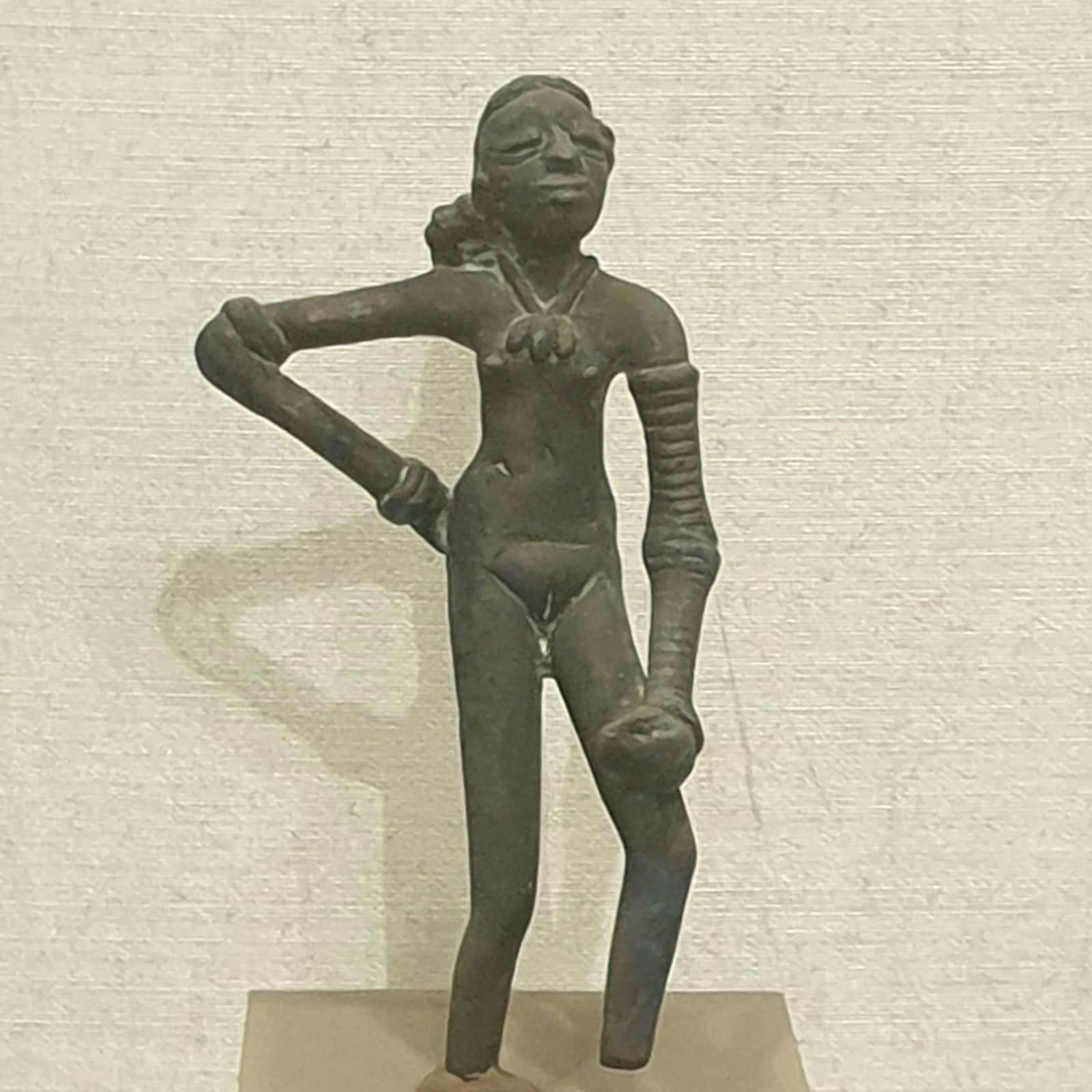
Her striking stance, minimal clothing, and intricate jewelry suggest a society that appreciated dance and artistic expression, possibly linking it to religious or ceremonial performances. The statuette highlights the Indus Valley people's advanced metalworking skills (using the lost-wax casting technique) and offers a rare glimpse into the role of women, aesthetics, and entertainment in this ancient civilization.
Madhubani Painting, also known as Mithila art, is a traditional folk art form from the Mithila region of Bihar, India. It is characterized by intricate patterns, bright colors, and themes drawn from nature, mythology, and daily life.

Originally painted on mud walls and floors, this art form evolved into paintings on handmade paper and cloth. Madhubani paintings hold deep cultural and spiritual significance, often depicting Hindu deities like Krishna, Rama, Durga, and Lakshmi, along with motifs of nature, love, and fertility. The use of natural dyes and geometric patterns reflects harmony and balance in life. This art is not just decorative; it serves as a symbol of cultural identity, women's empowerment, and environmental consciousness, as many paintings promote nature conservation and social themes.
Pattachitra, meaning “cloth painting”, is a traditional scroll painting art form from Odisha and West Bengal, known for its intricate detailing, mythological narratives, and vibrant natural colors. These paintings are created on handmade cloth (patta) or dried palm leaves, using natural dyes and bold, structured compositions. Pattachitra is deeply rooted in Hindu religious traditions, primarily depicting stories from the Ramayana, Mahabharata, and Jagannath culture.

In Odisha, it is closely associated with Lord Jagannath of Puri, where artists, called Chitrakars, create these paintings for religious rituals and temple decorations.Beyond its aesthetic appeal, Pattachitra plays a crucial role in preserving India's oral storytelling tradition and spiritual heritage. The art form also promotes sustainability, as it uses natural materials. Today, it continues to thrive as an expression of cultural identity and artistic legacy, influencing modern textile and decorative arts.
Warli Art is a traditional tribal painting style from the Warli community of Maharashtra, dating back to 2500 BCE. This art form is characterized by its monochrome, geometric patterns depicting daily life, nature, and tribal rituals using simple shapes like circles, triangles, and squares. The paintings are created using white pigment made from rice paste on a mud or cow-dung-coated wall, symbolizing a deep connection with nature.

Warli art holds spiritual and cultural significance, as it narrates stories of harvest, marriage, festivals, and tribal folklore. It is most famously seen in the Tarpa dance paintings, which depict community celebrations and unity. Traditionally, Warli paintings were not for decoration but rather a ritualistic form of storytelling and expression.In modern times, Warli art has gained global recognition, being adapted into fashion, home decor, and branding, while preserving the tribal heritage and sustainable artistic practices of India.
 alt="" class="image">